
If you use AI chatbots such as ChatGPT, Claude, Gemini or Perplexity regularly, this might strike a chord - and might get an eye roll. So why is 'operates at the intersection of X and Y' such AI catnip?
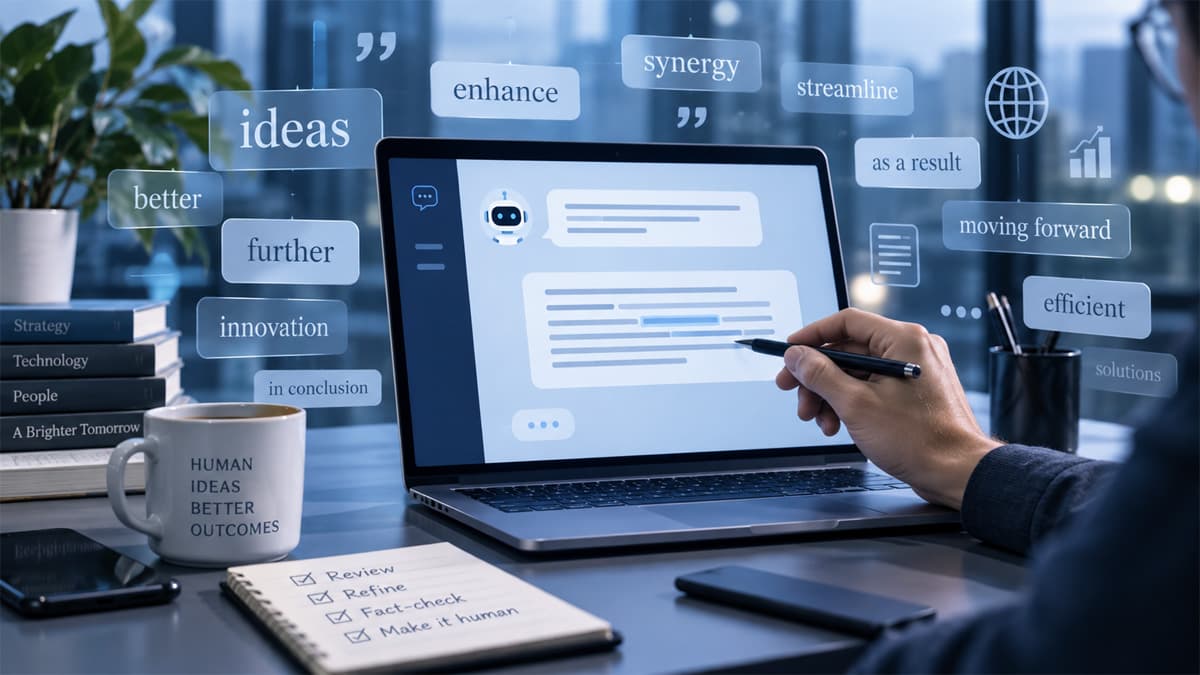
Well, it's a classic piece of corporate and/or consulting language because it sounds impressive, while saying relatively little.
Why does generative AI love it so much?
It's a highly reusable linguistic pattern
AI models have been trained on millions of sentences such as:
- 'We operate at the intersection of technology and design.'
- 'Our business sits at the intersection of data and human insight.'
- 'The company operates at the intersection of finance and technology.'
The phenomenon is most likely explained as pre-existing corporate language being used commonly in the training data of LLMs (Large Language Models), particularly from company websites, consulting reports, LinkedIn posts and the like.
It sounds analytical without requiring much substance
Compare these two sentences from my world of Tech and E-commerce, for example:
'We operate at the intersection of AI and E-commerce.'
and:
'We use AI to predict which customers are most likely to purchase this week.'
The first sounds sophisticated and polished. The second actually tells you something of substance.
It neatly joins two concepts
AI is fond of pairing things like:
- AI + human expertise
- data + creativity
- technology + strategy
- innovation + experience
'Intersection' conveniently makes the combination sound like a deliberate strategic position.
AI chatbots are particularly good at pairing related concepts and ideas. This capability is rooted in how language models represent and generate language, and helps make the chatbots conversational.
Take this example:
'By combining the speed and pattern recognition of AI with the judgment and accountability of a human specialist, diagnostic accuracy increases dramatically while reducing both false positives and doctor burnout.'
The technique tends to produce a pleasing, and polished result.
It is a safe sentence starter
When asked to write positioning copy for example, an AI doesn't necessarily know exactly what makes a company distinctive. 'We operate at the intersection of…' lets it produce plausible-sounding positioning without making a risky or highly specific claim that is made up.
Rather like a fortune teller, it hedges its bets and gives you just enough to sound convincing without over-reaching, perhaps waiting until you can supply it with more detail.
There are dozens of these sort of AI fingerprints
You may recognise some of these:
- 'In today's rapidly evolving landscape…'
- 'At its core…'
- 'Whether you're X or Y…'
- 'Unlock the power of…'
- 'Harness the potential of…'
- 'Seamlessly integrate…'
but my favourite AI-ish combination that always gets an eye-roll is:
'We operate at the intersection of {buzzword 1} and {buzzword 2}'
These phrases are very algorithmic, they are templates or patterns that generative AI uses to organise a sentence, or frame a generic point.
If you're editing AI-written business copy, 'intersection of' is one of the first things I'd search for and replace.
It's almost as much of a giveaway as the old 'em dash', the extended hyphen punctuation mark that became such a well known trait of AI-written content.
Why was the em dash so prevalent?
Well, a couple of reasons... again, largely because of deeply embedded training data. LLMs are trained on books, articles and academic papers that contain formal, well written prose where em dash was popular punctuation.
AI chatbots use the em dash up to four times as often as humans do. They work word by word, generating as they go, and don't stop to re-write or re-edit sentences. Liberal use of the em dash means they can 'run on' and link ideas with tactical pauses (em dash) without breaking grammar.
Fortunately, newer models with their advanced reasoning and thinking capabilities address these now obvious foibles, so we should see less and less of the good old em dash - that is, now we are at the intersection of frontier models and self-correction. :-)
Does it matter if we're all 'at the intersection of X and Y...'?
Well, maybe not, but I think it shows that generative AI is, to some degree at least, shaping the language we use. It's doing that by changing the popular phrases we use and surfacing constructs that work particularly well for AI, but that most of us wouldn't have naturally used before.
AI isn't inventing these clichés, rather it's bringing existing corporate-speak into common parlance. Has AI made corporate-speak contagious?
Before generative AI, one company might say that they combine technology and human expertise. Another that they bring together strategy, data and creativity. Now, both companies almost certainly operate 'at the intersection of technology, creativity and human insight'.
It's not that AI sounds robotic, but that AI can make perfectly competent humans sound identical to one another by influencing new trends in language.
AI isn't just learning the way we write. We're beginning to learn to write the way AI writes, and perhaps that's starting to homogenise corporate communication.
I jokingly use 'at the intersection of' to illustrate my point, but is AI changing and shaping the way we speak? How do we preserve a distinctive voice, for ourselves and our organisations?