
Since 2004, Jeremy Pilgrim has made 107 trips to the Far East, learning first-hand what can go right and what can go badly wrong when importing packaging from China.
The commercial upside is real: competitive pricing, modern machinery, strong technical skills and increasingly innovative design. But the risks remain substantial, from quality failures and legal complexity to cash flow pressure and expensive delays.
The rewards of buying direct
Businesses do not ship packaging 6,000 miles if they can source it just as cost-effectively in the UK or Europe. Price has long been the main driver to Asia, particularly for paper and board products and for formats where print, film and paper finishing add value. Rigid gift boxes, gift bags and retail bags are all examples where the economics can be highly attractive.
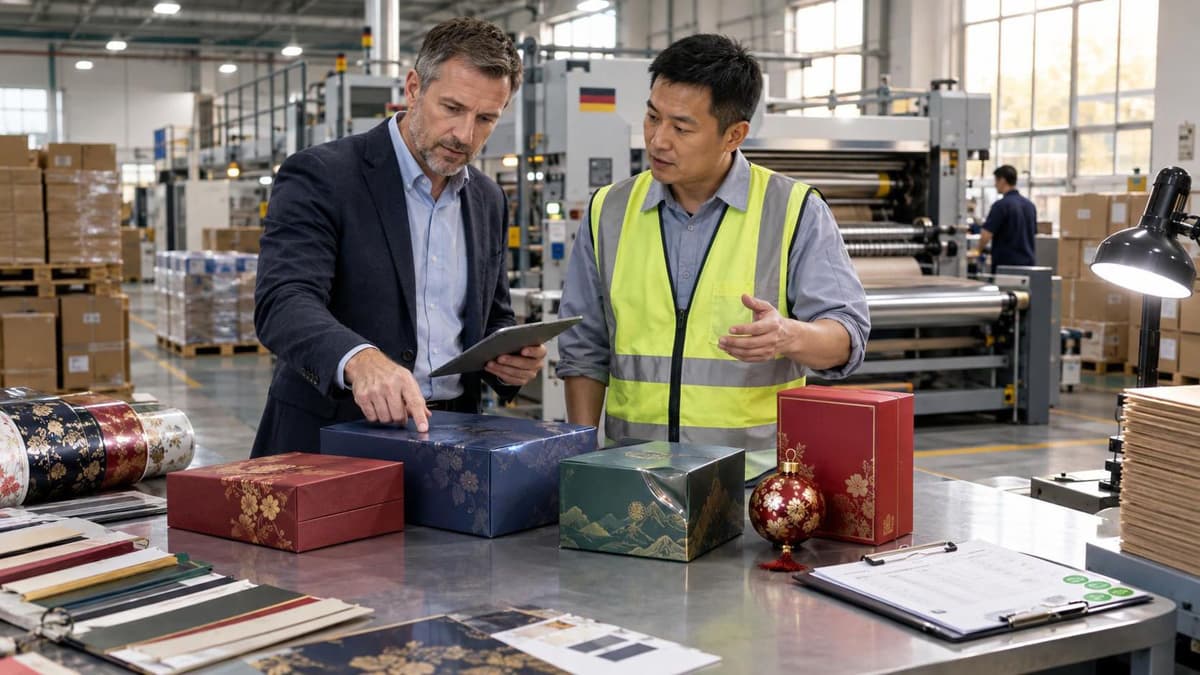
That value proposition now extends beyond price alone. Chinese factories have changed significantly over the past two decades, with many operating new German-made machinery for corrugating, finishing and box-making. Skill levels are often comparable with, or even stronger than, European production, and China has evolved from a manufacturing base known for copying into one that increasingly contributes genuine design innovation.
The risks are real
Despite the benefits, buying direct still makes many businesses understandably cautious. One of the biggest issues is who you are actually dealing with. If a dispute arises, recovering money or reaching a fair settlement with a factory operating under a different legal system can be extremely difficult, and few UK buyers want to find themselves in a legal battle governed by Chinese law.
Timing also matters. If a fault is identified before goods leave China, it may add four weeks to the critical path. If the problem is only discovered once the shipment lands in the UK, resolving it could take 12 weeks or more, often forcing the buyer to air freight replacement stock to meet deadlines. That can turn an apparently profitable purchase into a very expensive lesson.
There are also practical day-to-day pressures. Language barriers can create misunderstanding, while payment terms often require cash up front, leaving buyers to commit funds long before stock arrives. That puts extra strain on working capital and heightens the cost of any mistake.
The £60,000 bauble
One of Jeremy's most painful experiences came around 20 years ago, when large pulp baubles were being produced for a major UK health and beauty brand's Christmas promotion, with products packed inside. What began as a simple bauble quickly became more complex: first printed, then covered with glued paper, then finished with glitter and spot UV.
Each added process introduced moisture, and drying took far longer than expected. Under severe time pressure, the baubles likely went into the container before they had dried sufficiently. After spending six to eight weeks at sea in highly humid conditions, they arrived warped so badly that the two halves no longer fitted together.
The result was unavoidable and costly. More than £60,000 had to be spent on air freighting replacement product to put the issue right. It remains a stark reminder that while the rewards of Far East sourcing can be substantial, failures are often disproportionately expensive to fix.
"The rewards can be great, but when things go wrong, they're very expensive to fix."
Jeremy Pilgrim, Managing Director, Smarter Packaging
How far China has come
Historically, one of the greatest challenges for Chinese factories was labour retention. Chinese New Year, the largest annual human migration in the world, meant huge numbers of workers returned home to their families, and many did not come back. Some were needed on family farms, while others could move quickly to another factory for only a modest pay rise. Retaining skills, continuity and production knowledge was difficult, and quality often suffered as a result.
There was also a different manufacturing mindset. A famous example tells of a European shoemaker who sent a sample shoe to a Chinese factory to copy. When the shipment arrived, every pair included a nail through the sole because the display sample had been removed straight from a board, nail and all. Rather than ask a question and risk embarrassment, the factory reproduced the sample exactly.
That era has largely passed. Better education, a younger workforce and a more international outlook have helped reduce these kinds of mistakes, and today's best factories are more sophisticated, more consistent and better equipped than ever before.
Why a trusted partner still matters
Modern machinery, stronger skills and better design do not eliminate risk. Buyers are still dealing with suppliers thousands of miles away, and when problems occur, resolution can still be slow, complex and expensive. That is why experienced local support remains so important.
Smarter Packaging positions itself as that trusted UK partner, giving customers access to Far East pricing while managing sourcing, quality and resolution through a UK business. If something goes wrong, the customer is not left navigating overseas legal systems alone. Instead, they have a partner operating under UK law and UK commercial expectations, with the relationships and know-how to solve issues quickly.
Those 107 trips to China were not made for the airline food. They were made to build the knowledge, contacts and trusted factory partnerships that help prevent costly mistakes before they happen. For businesses importing gift, retail or consumable packaging, that experience can provide the benefits of Far East sourcing without the need to learn every lesson the hard way.
If you're bringing in gift, retail or consumable packaging and want Far East prices from someone who has lived this story and made the mistakes for you, please get in touch.